Why bottoms need their own manual
Bottoms Are the Hardest Thing Most Streetwear Brands Make
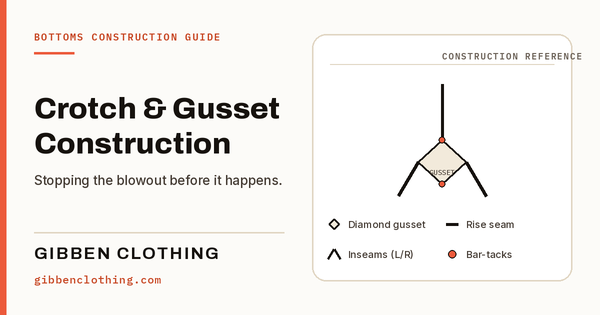
A tee has a couple of seams under load. A pair of joggers has a crotch junction, two inseams, two outseams, a waistband, and pockets, all under strain every time someone sits, squats, or takes the stairs.
Bottoms are also sized in two directions: waist and length. That one fact changes your pattern, your grading, your minimums, and your stock planning.
And customers judge bottoms on fit first. A hoodie can run a little big and still sell. A pant with the wrong rise goes straight back.
Most bottom advice skips all of that. This guide doesn’t. Every chapter comes out of running real bottoms production:
The samples that split at the crotch, the elastic that rolled, the leg that twisted after one wash, and the QC calls that saved a drop.
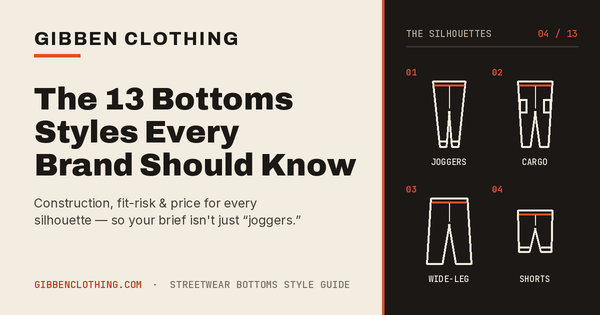
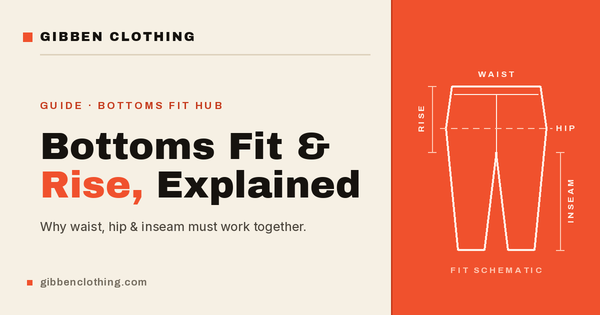
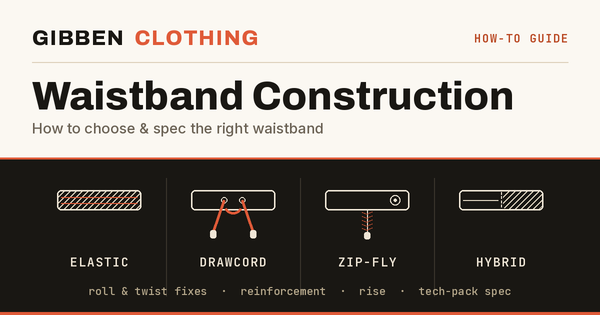
It’s built as a manual, front to back. Foundations come first: styles, fit, fabric, and weight. Then the style-by-style guides, costing, and buyer segments.
From there, it moves into construction, QC, decoration, washes, and trends, and closes with case studies and a full reference section.
Read it in order, or jump straight to the chapter you need. Every guide below is a full walkthrough of one decision.
$4.97 billion
Knitwear exports from Pakistan in FY2025-26, the country’s largest textile export category, are inside total textile exports of $17.93 billion. Sialkot’s cut-and-sew floors sit within that supply base. Source: Profit, citing Pakistan Bureau of Statistics data.