
Puffer Jacket Manufacturer
Puffer Jacket Supplier
Private Label Puffer Jacket
Cut and Sew Puffer Jacket
Low MOQ Puffer Jacket
Puffer · B2B Production Brief

Puffer Jacket Manufacturer

One insulation system, three silhouettes. Baffle-quilted puffers with even loft and your choice of down or synthetic fill built as a full jacket, a sleeveless vest, or an oversized statement block, all to your tech pack.

Minimum order From 50 pcs / style
Builds Jacket / vest / oversized
Fill Down or synthetic
Shell Nylon / ripstop
Sampling 7–10 days
Bulk 5–7 weeks
Get a quote Request a sample

Send a product photo and tell us if it’s a jacket, vest, or oversized. We will fill the gaps in the spec and quote within 24 hours.

Even loft

Quilting that holds fill, with no cold spots or flat panels

Checked by hand

Downproofing and fill verified on your actual shell

3 builds, 1 system

Jacket, vest, and oversized from one insulation spec

Every jacket

Individually checked before packing
Positioning

The puffer is a fill-management product, not a fashion guess:

A puffer’s quilting is not decoration; it is the engineering that holds insulation evenly across the garment so there are no cold spots and no flat panels. Get the fill management right, and the puffer becomes the highest-perceived-value piece a streetwear brand can carry. We build the same core system in three commercial silhouettes so you can position deliberately: the flagship jacket, a lower-cost vest, or an oversized statement drop.

Built for brands

Who we make puffers for

One insulation system serves three kinds of brands. Here’s what each one usually starts with.

Streetwear brands with a winter flagship

The full puffer jacket is the highest-perceived-value piece in the range. It anchors the winter drop and lifts everything around it.

All jackets we make

Brands entering outerwear

Start with the vest. It carries full puffer construction at a lower unit cost and layers over the hoodies you already sell.

Hoodies to layer under

Statement and hype drops

The oversized puffer: deep baffles, dropped shoulders, and a roomy block. Maximum presence for a limited drop.

How low-MOQ production works

The three builds

Jacket, vest, or oversized explained

These are the same insulation system in three blocks. Here is exactly how they differ, so you can spec the right one or run more than one as a family

Build Silhouette What it’s for Ships
Puffer jacket Baffle-quilted body, sleeves, fixed/detachable/no hood The flagship winter piece with the highest perceived value Compressed carton
Puffer vest Sleeveless, bound-shoulder, high-stand collar Core-body warmth with full arm movement; layering + lowest-cost entry into insulated outerwear Most compact of the three
Oversized puffer Deep baffles, dropped shoulder, roomy statement block, two-way zip Maximum warmth and maximum presence statement drops Most volumetric sea freight recommended

The vest is the smart-first insulated piece. It carries full puffer construction knowledge at a lower unit cost, and the bound armhole, which has to seal the fill, finish cleanly, and layer over a hoodie sleeve without bunching, is the one part that separates a real outerwear factory from a fleece shop.

Technical Specification

Build sheet

Shell
Nylon / ripstop
Quilting
Baffle / channel / box / deep baffle
Closure
YKK zip + storm flap; two-way on oversized
Pockets
Zip hand + internal
Fill
Down or synthetic
Lining
Taffeta / quilted
Hood
Fixed, detachable, or none
Trims
Elastic or ribbed cuffs; bound armholes on vest
Fabric, fill & hardware

Options

Down or synthetic: the first fill decision

Down

How it wears:
The most warmth for the least weight, with a light, lofty feel.

What it needs:
A downproof shell, checked by hand so no feathers work through.

Choose it for:
Premium lines where lightweight warmth is the selling point.

The practical default

Synthetic

How it wears:
Keeps insulating when damp and is easier to wash and care for.

What it needs:
Even quilting so the fill doesn’t shift.

Choose it for:
Most streetwear runs lower unit costs and wet-weather markets.

Quilting patterns at a glance

Quilting The look Best on
Channel Horizontal lines, sleek and streamlined Vests and slimmer jackets
Box A square grid that holds fill in place Classic and heritage puffers
Baffle Full, rounded chambers with even loft The flagship puffer jacket
Deep baffle Tall chambers with maximum volume Oversized statement puffers

Side by side

A fill-managed puffer vs. a fashion guess

Your positioning says it: the quilting is engineering, not decoration. Here’s what that engineering prevents.

Detail Fashion-guess puffer Gibben puffer
Loft Cold spots and flat panels Even loft across every chamber
Fill after wear Shifts and clumps to the bottom Held in place by the quilting
Feathers Work through the shell Downproofing verified by hand on your shell
Vest armhole Bunches over a hoodie, leaks fill Bound to seal the fill and layer cleanly
Embroidery Stitched into the fill, puckers Backed and kept clear of fill zones
Closure Plain zip that lets wind through YKK zip with storm flap
Weather claims Whatever sounds good on the page An honest claim matched to the build

A puffer that sheds feathers sheds customers

A puffer is the piece your customer paid the most for. Feathers on a black coat, a cold patch across the back, or fill that drops to the hem by January all turn into returns and reviews. The quilting and downproofing decide whether the flagship lifts your brand or drags it down.

Decoration & branding

Getting your identity onto the shell

Heat-transfer / DTF

Full-color logos that bond to nylon without piercing the shell are the default on technical fabric.

Embroidery

Backed chest hits; kept clear of the quilted fill zones so nothing puckers.

Patches

Woven, rubber, or chenille premium chest branding that reads “original” rather than “applied.”

Hardware

Branded YKK pulls and snaps small surfaces, outsized perceived value.

The puffer is the piece in every winter photo

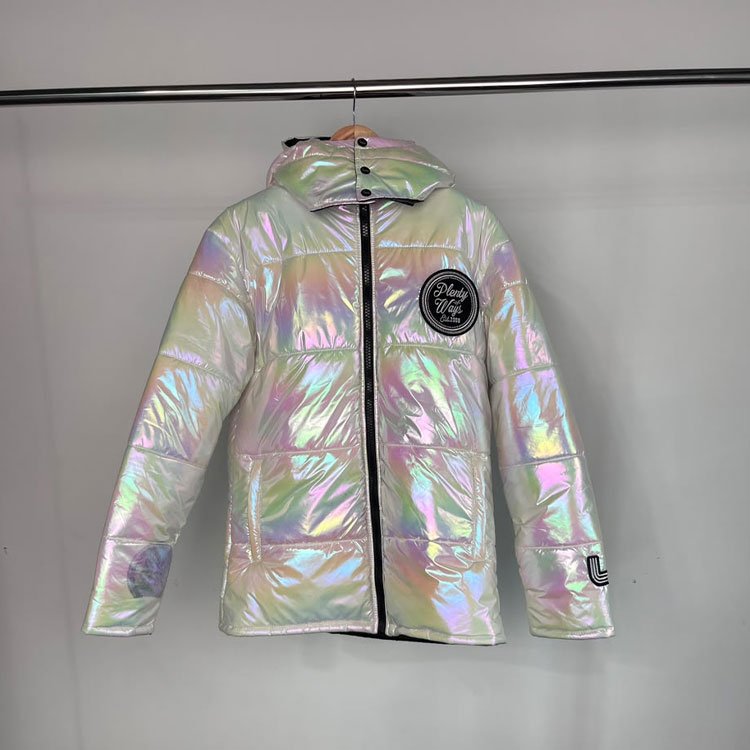
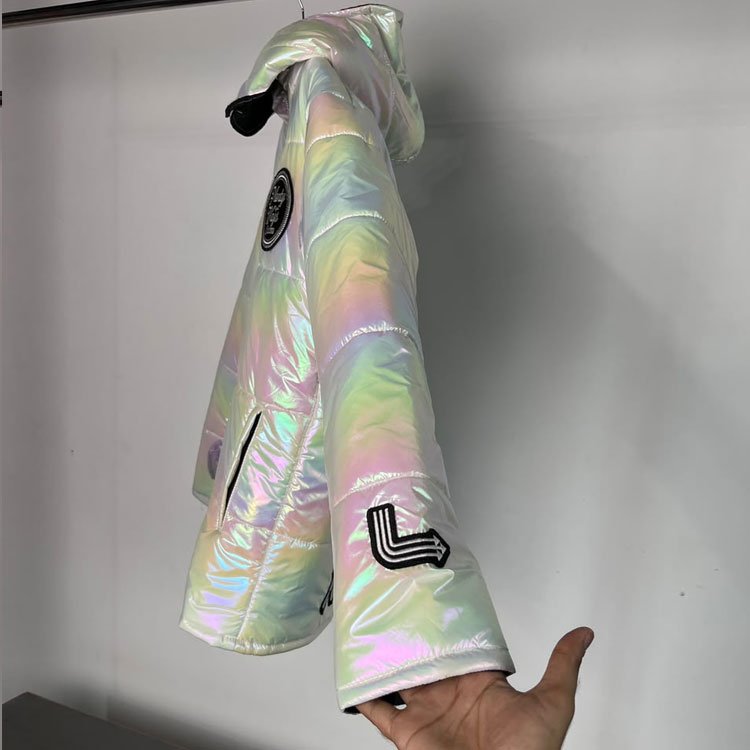
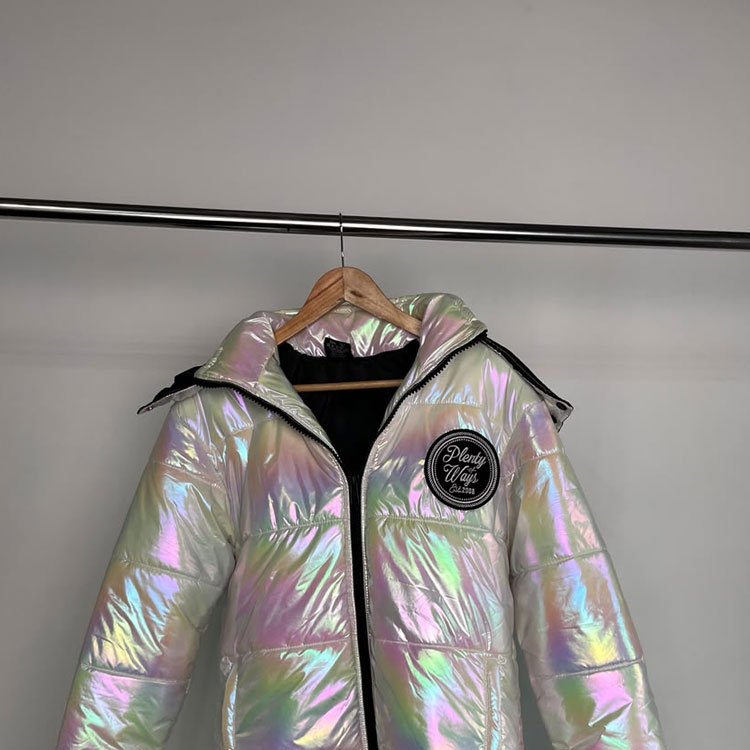
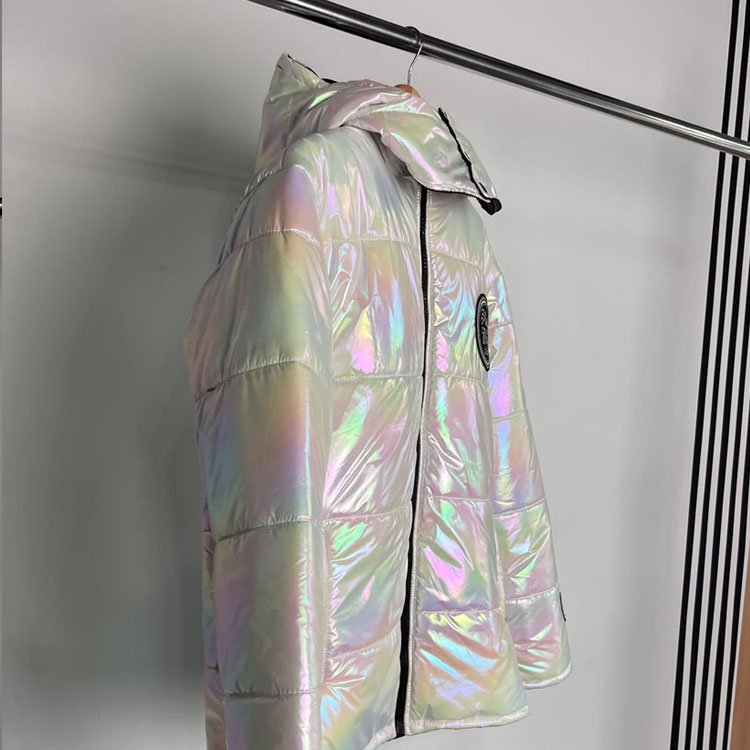
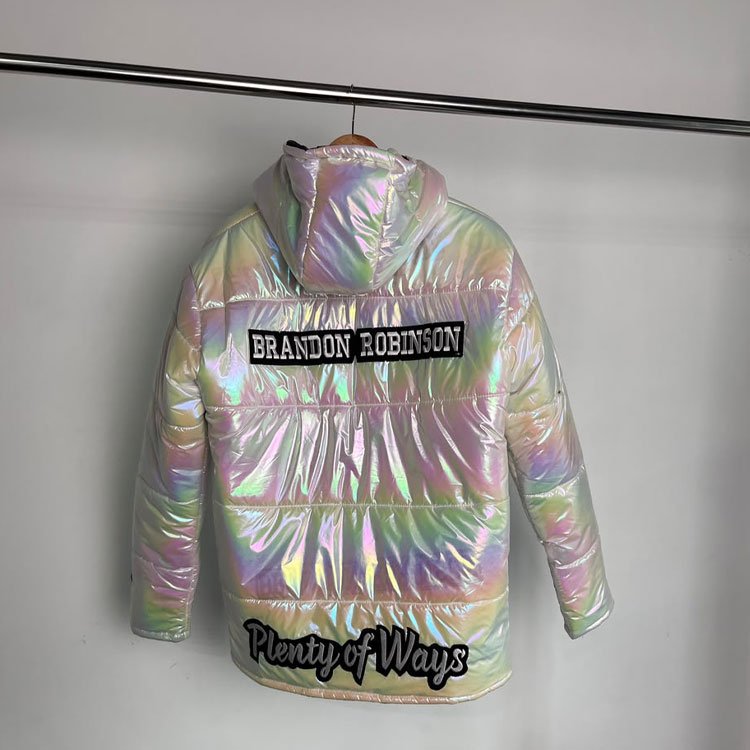
Glossy shells catch the light, oversized blocks fill the frame, and a puffer gets worn over everything from November to March. A chest patch or a branded pull on your flagship puts your brand in the picture all season.

MOQ & Pricing

What you’ll order

Quantity / style Indicative unit price
100–198 Base
200–598 −1%
600–998 −2%
1,000–1,998 −3%
2,000+ −4%

Exact pricing is issued on the quote against your fabric, decoration, and Incoterm. 

What moves a puffer’s price

Build
vest < jacket < oversized
Fill type and weight
down or synthetic
Quilting
deep baffle takes most
Shell
matte, glossy, recycled
Hardware
two-way zip, custom pulls
Decoration
patch, DTF, embroidery

Planning your range

Three builds, three price points

Your page says you can run more than one build as a family. Here’s how brands usually use each.

The vest

Your entry price. Full puffer construction at the lowest unit cost, and it layers over your hoodies.

The jacket

Your flagship. The highest-perceived-value piece in a streetwear range.

The oversized

Your statement drop. Maximum warmth and presence, for a limited run.

Same shell, same fill and same colorway across all three, so the family reads as one collection.

How to start

What to send us

The fastest quotes come from the clearest brief, but you don’t need a finished tech pack to start. Any of these gets us moving:

01

A reference or your own design:

A product photo, a sketch, a competitor link, or a full tech pack whatever you have. We fill the gaps and confirm them with you.

02

Your artwork:

Logos and graphics as vector files where possible, with Pantone references for exact color matching on trim cards.

03

Quantities & target price:

Rough per-color-weather volume and the landed price you’re aiming for, so we quote to your real economics, not a guess.

04

Your market & season:

Where it sells and when this drives fabric weight, lining, and the honest weatherproofing claim on your page.
Sampling, lead time & QC

From your tech pack to a run you can trust

Sampling

Tech pack or reference → fit sample → fill and quilting sign-off → pre-production (14–21 days). Fill and quilting land in the first sample.

Lead time

Bulk: 5-7 weeks after approval, plus shipping 5-12 days air.

Quality control

Each jacket is individually checked before packing.

Compliance

Cerfied and registered company.

Count back from winter

Puffers sell in a short season, and missing it means holding stock for a year. Here’s how far back to start.

Stage By air By sea
Sampling to pre-production 14-21 days 14-21 days
Bulk after approval 5-7 weeks 5-7 weeks
Shipping 5-12 days 25-40 days
Stock in hand About 8-12 weeks About 11-16 weeks
What’s included

What every run includes

Tech-pack review or build-out. Send a tech pack or just a reference photo we spec the missing lines and confirm them with you before sampling.

Physical sampling. A real-fit sample in your fabric and color, plus a decoration strike-off, before a single bulk unit is cut.

Custom grading. Your size chart, or our house block graded to your reference not a fixed-size set you have to accept.

Branded labeling & packing. Woven or printed neck labels, care labels, hang tags, and polybag/box packing to your spec.

Checking. Every run is inspected against your approved sample before it ships, not spot-checked after the fact.

One point of contact. A solo operator who owns your order end to end, replies within 24 hours, and keeps your designs confidential.

Sizing & grading

Size chart and custom grading

Size Chest Length Sleeve
S 112 70 64
M 118 72 65
L 124 74 66
XL 130 76 67
One example block fully custom graded to your reference. The vest drops the sleeve column and grades with layering ease at the armhole; the oversized block runs wider, dropped, and longer. Armhole and layering ease are verified on the fit sample worn over the real mid-layer, not a bare form.
Care

Careful guidance you can lift onto your listing

Cold- and gentle- wash; tumble low with dryer balls to re-loft the fill. Care labels are printed to your branding. Copy this onto your product page as-is; accurate aftercare reduces returns and reads as expertise to your customer.

Why GIBBEN CLOTHING

Why build this run in Sialkot?

Gibben Clothing is a cut-and-sew manufacturer based in Sialkot, Pakistan, one of the world’s densest apparel and leather-goods manufacturing clusters, the same ecosystem that supplies a large share of the world’s sportswear, gloves, and hand-stitched footballs. A puffer lives or dies on downproofing and even fill, both of which we verify by hand on the actual shell fabric before your run ships.

On-the-floor QC. We inspect the fabric, the sample, and the run in person not over a portal. If something is off spec, it is caught here, before it ships to you.

Short sourcing loops. Fabric, trims, hardware, and decoration sit within a short radius, which is why sampling moves in days rather than weeks.

Honest by default. We spec how the garment is actually worn, and we won’t let your product page overclaim the reputation on the rack is yours, and we protect it.

Confidential. Your designs, tech packs, and artwork stay yours. NDA on request before you send anything sensitive.

FAQ Puffer

Buyer questions, answered

For most streetwear runs, synthetic: it keeps insulating when damp, is easier to care for, and keeps the unit cost down. Choose down when lightweight warmth is the selling point, and your price supports it. Down needs a downproof shell, which we verify by hand on your fabric.

Yes. All three are the same insulation system in three builds, so they can share the shell, fill, and colorway. That gives you an entry price, a flagship, and a statement piece that read as one collection.

The vest carries full puffer construction at a lower unit cost, layers over a hoodie, and gives you core-body warmth with full arm movement. It’s the lowest-cost entry into insulated outerwear and a good test of the factory, because the bound armhole has to seal the fill and finish cleanly.

The oversized build runs wider, with a dropped shoulder, deeper baffles, and a longer length than our example block. We grade it to your reference and verify the ease on a fit sample worn over a real mid-layer.

Not when downproofing is done right. We verify downproofing and even fill by hand on the actual shell fabric before your run ships. Synthetic fill avoids feather leakage altogether.

In compressed cartons. The vest is the most compact of the three builds. The oversized puffer is the most volumetric, so we recommend sea freight for it.

Channel for a sleek, streamlined look; box for a classic grid that holds fill in place; baffle for the full flagship puffer; and deep baffle for oversized statement volume.

Yes. Hoods can be fixed, detachable, or left off entirely.

Yes, as backed chest hits kept clear of the quilted fill zones, so nothing puckers. For full-color logos on nylon, heat transfer or DTF bonds without piercing the shell.

Yes. A recycled shell is available alongside matte and glossy nylon.