Garment floorset by the sewing line = Lower
Fabric floorset by the dye/knit lot = This one wins
The trap: founders quote the garment floor and budget for it, then the fabric floor, hidden one step upstream, sets the real minimum per color.
This is the definitive guide to clothing manufacturer MOQ written from inside a working cut-and-sew factory, not from a pricing page.
If you are about to place your first production order, the minimum order quantity is the single number that decides whether the run is affordable, whether your cash is safe, and whether you end up with stock you can actually sell.
Most first-time founders treat MOQ as one number: a factory either has it or does not have. It is not one number. It is two, stacked on top of each other, and the one nobody quotes you is usually the one that hurts.
Here is everything covered below:
Read it start to finish, or jump to the chapter you need.
Chapter 01
An MOQ is the minimum quantity a factory will produce per order. The number is not a gatekeeper. It is the point below which the order no longer makes sense for either of you.
Picture what has to happen before a single hoodie is sewn.
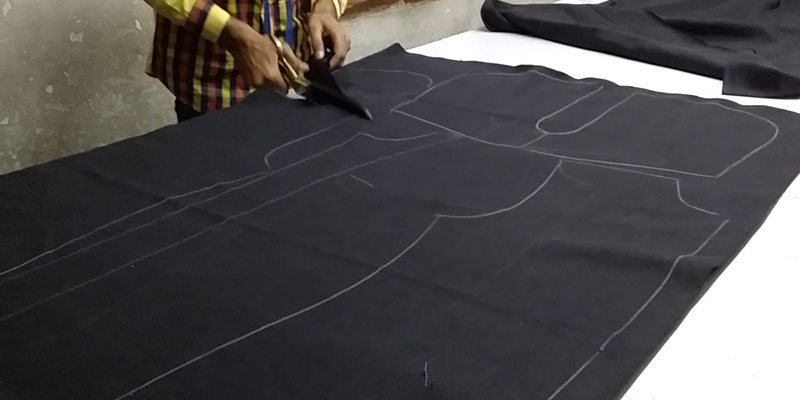
A pattern is digitized and graded across sizes. Markers are laid. Fabric is spread and cut. Threads are color-matched. Machines—flatlock, overlock, coverstitch, and bartack—are re-threaded and re-tensioned for your fabric.
A line is balanced so each operator has the right step. A first sample is approved.
All of that happens once, no matter how many units follow. It is a fixed setup.
On a 1,000-piece run, that setup is spread across 1,000 garments and disappears into a few cents each.
On a 30-piece run, the same setup lands on 30 garments, and suddenly each one carries a crushing share of cost the factory either eats or passes to you as a price that makes no sense.
Because a small run is not cheap to make. A factory line earns when it runs long and steady.
Every changeover, new fabric, new pattern, new color stops the line, costs labour, and produces nothing sellable until it is dialled in.
A factory that fills its week with tiny runs spends most of its time setting up and very little making garments. The MOQ is how it protects the economics that let it quote you a fair per-unit price in the first place.
Once you see the MOQ as these three forces rather than an arbitrary gate, the rest of this guide becomes about working with them instead of fighting them.
The setup behind every order, spreading and cutting, happens once, whether the run is 50 pieces or 5,000.
Chapter 02 · The trap most founders miss
Every order rests on two separate minimums. The garment floor is set by the sewing line. The fabric floor is set one step upstream, at the knit and dye lot. Your real minimum is whichever floor is higher, and it is almost always the fabric floor.
This is the MOQ most people mean when they ask, “What’s your minimum?” It is the smallest run the sewing line will set up for the number that makes pattern, cutting, and line balancing worthwhile. For a small or boutique cut-and-sew factory, this floor is often low, in the range of 50–150 pieces per style. It feels achievable, so founders budget around it.
Custom cut-and-sew starts with fabric that often does not exist yet in your color. It has to be knitted, then dyed to your shade. Knit mills and dye houses run in lots, and those lots have minimums of their own measured in kilograms of fabric per color, not in garments.
A custom knit or dye lot commonly carries a minimum in the region of a few hundred kilograms per color. One mill we sourced against quotes a 300 kg minimum per design; another drops it for stock bases. The exact figure varies by mill, fiber, and whether the color is custom-dyed or pulled from stock but the unit is always weight per color, and the floor is real.
The garment floor is quoted in pieces, so you budget in pieces. The fabric floor is quoted in kilograms, one step upstream, so you never see it until it sets your true minimum per color and the two numbers don’t match.
To compare the two floors, you have to convert the fabric floor into pieces. A mid-to-heavy fleece hoodie uses roughly 0.8–1.2 kg of fabric once you include the body, hood, ribbing, and cuffs, plus normal cutting waste and a few percent dyeing loss. So a single dye lot does not buy you “some fabric”; it buys you a fixed batch of hoodies in that one color.
Worked example — illustrative figures
Say you want a heavyweight pullover hoodie in a single custom color. Here is how the two floors actually resolve:
The sewing line would happily make 100. The dye lot will not run for less than ~300 worth of fabric. The higher floor wins, so the honest minimum for one custom color is closer to 280–300, not 100.
The fabric floor only bites when the color is custom. If you build your first run on a stock base fabric in a house color the mill already holds, there is no dye lot to trigger the fabric’s existence, so your real minimum collapses back down to the garment floor. This single fact is the most powerful lever you have, and it is the backbone of Chapter 4.

Your MOQ is the higher of the garment floor and the fabric floor. Custom color raises the fabric floor. Stock color removes it. Plan your first run around the floor you can live with.
Chapter 03
Minimums move with construction complexity and fabric. A cap is not a coat. Below are working ranges for custom cut-and-sew, split into two floors so you can see both. Treat these as planning ranges; your exact numbers depend on the factory, the fabric, and whether the color is custom or stock.
| Product type | Garment floor (per style, typical) |
Fabric floor effect (custom colour) |
Notes |
|---|---|---|---|
| T-shirt | 50–150 pcs | High-pull-up light fabric, so a dye lot = many shirts | Lowest-complexity entry; fabric floor stretches furthest here. |
| Polo shirt | 50–150 pcs | Moderate collar/cuff knit adds a second component | A self-fabric or rib collar can carry its own small minimum. |
| Pullover hoodie | 50–150 pcs | Strong fleece is heavier, fewer pieces per dye lot | Most common first run; see the worked example above. |
| Zip-up hoodie | 75–200 pcs | Strong plus zipper/trim minimums | Hardware (zips, pulls) can add its own MOQ for custom finishes. |
| Heavyweight hoodie (400 gsm+) | 75–200 pcs | Strongest, heaviest fabric, fewest pcs per lot | Heavy fleece eats the dye lot fastest; budget the highest fabric floor. |
| Joggers/sweatpants | 75–200 pcs | Strong — same fleece family as hoodies | Pairs naturally with a hoodie of the same fabric and color. |
| Caps/headwear | 100–300 pcs | Varies; structured caps have component minimums | Often higher floors due to panels, buckram, and closures. |
| Woven shirt | 100–300 pcs | Moderate woven yardage minimums differ from knit | Woven mills sell by the meter with their own lot floors. |
| Outerwear/jacket | 100–300 pcs | High-multiple fabrics, linings, trims each with floors | Most components = most stacked minimums; highest planning risk. |
Planning ranges, illustrative. Confirm the exact minimums for your style and color with a quote; the fabric floor in particular swings widely by mill and fiber.
The garment floor column is the number a factory will say out loud. The fabric-floor column is the force that quietly raises it whenever you choose a custom color. The heavier the fabric and the more components a garment has, the more the fabric floor dominates. That is why a heavyweight hoodie carries a higher real minimum than a tee, even when both have the same garment floor on paper.
Chapter 04 · The playbook starts here
You rarely lower risk by talking a factory into a smaller number. You lower it by restructuring the order so the minimum buys you less exposure and more sellable stock. These are the four levers, in the order we’d pull them.
Each style is its own setup and, often, its own fabric floor. Five styles means five minimums to fill. Two styles mean two. Going narrow is the fastest way to make the math reachable on a first run.
This is the lever that beats the Two-Floor Rule. Build several styles on the same base fabric and the same color, and they share one dye lot instead of triggering several. Spread variety across colorways, not across fabrics.
The cleanest way to make the fabric floor vanish. If the mill already holds the base in a stock color, there is no dye lot to meet your real minimum drops to the garment floor. Save custom dyeing for when volume justifies it.
An MOQ is per style, not per size you choose how it splits across S–XXL. Split to expected demand, not evenly. A flat split leaves you long on sizes that don’t sell and short on the ones that do.
Two styles, on one shared base fabric, in one stock color, with a demand-weighted size split. That single combination can take a first run from “four stacked minimums I can’t fill” down to “one floor I can clear” without asking anyone to lower a number.
Chapter 05
A low minimum feels safe because the check is smaller. But “smaller check” and “lower cost per unit” are not the same thing. There is a crossover point where chasing a low MOQ quietly makes every garment more expensive.
Go back to Chapter 1. The fixed setup is the same at any volume. The fewer units you make, the more of that setup each unit carries. So as the run shrinks, per-unit cost climbs. A factory offering a very low MOQ is not waiving the setup; it is loading it onto fewer garments. You feel the small order total; you don’t always notice the inflated unit price hiding inside it.
| Run size | Order feel | Setup per unit | Per-unit cost |
|---|---|---|---|
| Very low MOQ | Smallest check, lowest risk | Highest | Highest |
| Midrun | Balanced | Moderate | Moderate |
| Full lot | Biggest check, most stock | Lowest | Lowest |
Directional, not to scale. The setup share, not the fabric, is what moves per-unit cost as run size changes.
Lower cost per unit is not the only goal. Sometimes paying the small-run premium is the smart, disciplined choice:
Don’t ask, “What’s the lowest MOQ?” Ask, “At what quantity does the per-unit price stop dropping fast?” Just past that knee is usually the smartest first run: low enough to protect cash and high enough that setup stops dominating the price.
For a full breakdown of where the money actually goes in hoodie fabric, trims, labor, setup, and margin, see our companion cost guide. What a custom hoodie actually costs →
Chapter 06
Everything above, compressed into the order we would actually place if it were our own brand and our own cash on the line.
Two founders, same budget, same factory, same week. The first spread the budget across six styles, each in its own custom color. Every style hit its own garment floor and triggered its own dye lot. The minimums stacked, the quote ballooned past budget, and half the colors had to be cut anyway, leaving a thin, awkward range.
The second picked two styles: a pullover hoodie and matching joggers on one shared fleece in one stock color the mill already held. One fabric floor, shared. No dye lot to meet. The same budget bought a deeper, cleaner run with a size split weighted to real demand. It sold through, funded a second run, and that run paid for the custom color.
Same money. One ended up over budget with stock they couldn’t move. The other ended up with a sold-through drop and a self-funding second run.
For custom cut-and-sew, the garment floor’s minimum of the sewing line’s minimum is often in the range of 50 to 150 pieces per style at smaller factories, rising with construction complexity. But that’s only the first of two floors. If your color is custom, the fabric and dye lot set a second minimum, measured in kilograms per color, that usually becomes your real minimum. Always ask for both numbers.
Sometimes, but it rarely saves money. A factory may run below its minimum, but the fixed setup then lands on fewer garments, so the per-unit price climbs. You’ll write a smaller check and pay more per piece. If your goal is to validate a product, that premium can be worth it. If your goal is a low unit cost, going below MOQ works against you.
Because color is a fabric decision, not a sewing decision. Each custom color needs its own dye lot, and dye lots have minimums measured in kilograms of fabric. The sewing line might happily make 100 pieces, but the dye house won’t run a lot for fewer than a few hundred pieces’ worth of fabric. The higher floor wins, so adding a color can raise your minimum far more than adding a size.
Almost always per style and often per color within a style. Five styles generally means five minimums to fill, not one shared total. This is exactly why narrowing to fewer styles and sharing one base fabric and color across them is the most effective way to make a first run reachable.
Yes. The MOQ is a quantity per style, and you decide how it splits across sizes. You’re not forced into an even spread. Weight the split toward the sizes you expect to sell the middle of the range for streetwear and keep the extremes shallow until you have sales data. A demand-weighted split makes the same minimum sell-through faster.
As a rule, yes, the smaller the run, the more fixed setup each unit carries, so the per-unit cost rises. That doesn’t make low MOQ wrong. For testing a new style, protecting early cash flow, or drop-based selling, paying the small-run premium can be the disciplined choice. Just go in knowing you’re trading unit cost for flexibility, not getting both.
Build your first run on a stock base fabric in a color the mill already holds. If the fabric already exists, there’s no dye lot to trigger, so the fabric floor disappears and your real minimum drops to the garment floor. Save custom colors for run two, once the product has proven it sells. It also shortens lead time, since you skip the dyeing round.
At minimum: your styles, target quantities, a fabric direction (weight and fiber), your colors, and ideally a tech pack or a reference sample. The more precise you are, the more accurate the quote and the clearer both floors become. See our tech-pack guide →
From the manual
These chapters cover taking a streetwear brand from idea to shipped units, costing, sourcing, tech packs, QC, freight, and launch. All written from the Sialkot factory floor.