Sublimation
Sublimation Tee Manufacturer
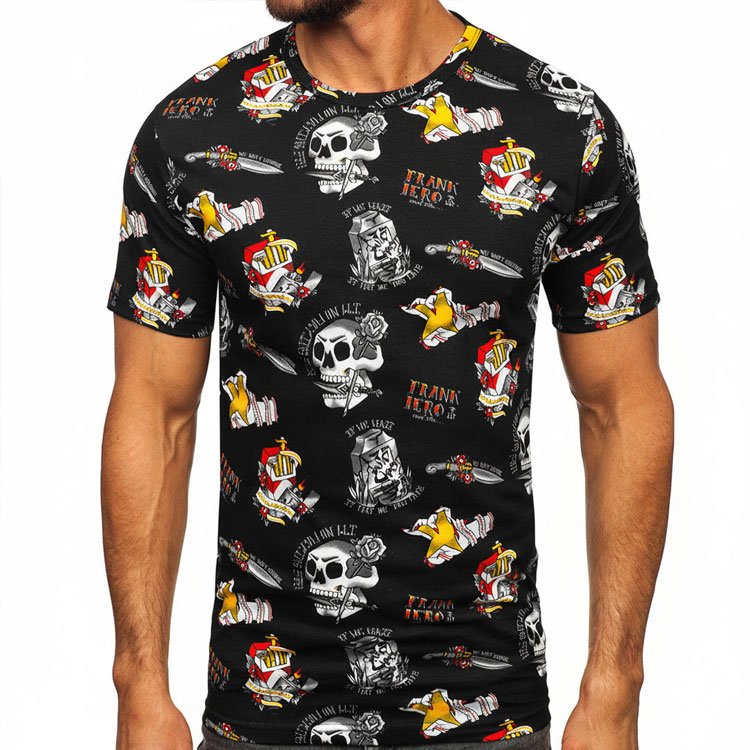
Edge-to-edge, seam-to-seam prints that won’t crack or fade dye-sublimated into polyester for photographic, full-coverage designs at brand volume.


Edge-to-edge, seam-to-seam prints that won’t crack or fade dye-sublimated into polyester for photographic, full-coverage designs at brand volume.
‘All-over print’ gets promised loosely, and buyers get burned when a supposedly seam-to-seam design turns out to be an oversized front print with blank sleeves and sides. Genuine all-over coverage is a different manufacturing process entirely: the fabric is printed flat in panels first, then cut and sewn so the artwork runs unbroken across the whole garment, sleeves and sides included.
That print-then-cut sequence is what separates real all-over from a big front hit, and it’s why all-over is quoted as cut-and-sew decoration rather than simple printing. This brief explains the process, the fabric it requires, why sublimation doesn’t work on cotton, how seams join, and what your artwork needs to be set up correctly.
Inside: how all-over coverage is built, the build sheet, base fabrics, placement vs. full all-over pricing, artwork setup, volume pricing, and buyer FAQs.
For genuine seam-to-seam coverage, panels are printed flat first, then cut and sewn so the design runs unbroken across the whole garment, including sleeves and sides. That print-then-cut sequence is what separates real all-over from oversized front prints, and it’s why all-over is quoted as cut-and-sew decoration, not just printing.
Sublimation bonds into polyester fibres, so it works on poly and high-poly blends not on 100% cotton. We’ll advise the right base for your artwork.
Sublimation dye turns to gas and bonds inside the polyester fiber so the color is part of the fabric, not sitting on top. That’s why it never cracks or peels.
The ink is transparent and needs a white or light base to show true color. Dark areas in your design are printed, not dyed fabric.
On blends, the print takes a softer, vintage-faded look proportional to poly content,, a deliberate aesthetic some brands want.
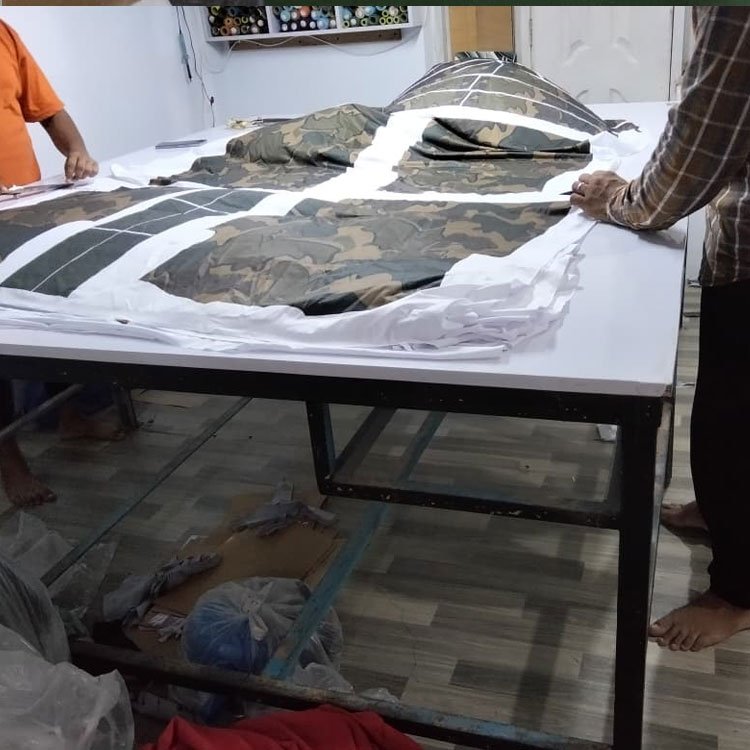
The moment that tells you all-over is a sewing job, not a printing job, is when a printed panel hits the cutting table. The artwork has to be mapped to the cutting pattern so the design lands where it should on the finished garment. Get the mapping wrong, and a feature ends up in the armpit.
Seams are where honesty matters. On a full all-over build, the print continues across side seams and sleeves, but perfect pattern alignment at every single seam has physical limits: fabric stretches, panels shift a hair. Wstretches, anders exactly how joins land on the PP sample rather than promising a seamlessness that no cut-and-sew process can fully guarantee.
That upfront honesty is the point. A brand that sees the real seam behavior on the sample signs off knowing what it’s getting and doesn’t reject a bulk run over a limit that was always going to be there.
Send print-ready panel files or a repeating pattern tile at 150–300 dpi actual size. We map it to the cutting pattern and return a full digital mock plus a printed strike-off before bulk production, so color, scale, and placement are all approved on the real thing first.
Unit price steps down as quantity rises same fabric, same QC, better economics. Split runs and reorders keep your earned tier.
| Quantity / style | Indicative unit price |
|---|---|
| 100–198 | Base |
| 200–598 | −1% |
| 600–998 | −2% |
| 1,000–1,998 | −3% |
| 2,000+ | −4% |
| Size | Chest | Length |
|---|---|---|
| S | 52 | 70 |
| M | 55 | 72 |
| L | 58 | 74 |
| XL | 61 | 76 |
Customizable to your tech pack.
A brand wanted a photographic all-over across the full garment and had been quoted ‘seamless’ elsewhere, a promise that would have failed at the side seams and triggered a dispute.
We mapped the artwork to the cutting pattern, showed exactly how the joins landed on the PP sample, and got sign-off on the real seam behavior before bulk. The delivery matched the approved sample because the sample told the truth.
Seam-to-seam coverage
units
Seam disputes
Not directly sublimation dye bonds only to polyester fibre. On poly-cotton blends the print takes a softer, vintage-faded look proportional to the poly content. For vivid full-colour on cotton, DTG or DTF is the right tool, and we’ll say so.
Yes, on the full all-over build panels are printed before sewing so the artwork continues across side seams and sleeves. Perfect pattern alignment at every seam has physical limits; we show you exactly how joins land on the PP sample.
Full all-over adds cut-and-sew labor and a larger print area, so it is priced above a placement print on the same base roughly. Both are itemized in the quote.
Sublimation ink is transparent it needs a white or light base to show true color. Dark garment areas in your design are printed, not dyed fabric.
Not at spec our poly jersey and performance knits are chosen for hand-feel, and poly-cotton bases give a softer, more cotton-like touch with a faded print aesthetic. We’ll sample both against your artwork.
Send print-ready panel files or a repeating pattern tile at 150–300dpi actual size; we map it to the cutting pattern and send a full digital mock plus a printed strike-off before bulk.